Wealth of nations (1776) - Adam Smith
The Wealth of Nations is het fundamentele werk waarin Adam Smith de basis legt voor de moderne economie door concepten als de vrije markt, arbeidsverdeling en de 'onzichtbare hand' te introduceren. Het boek wordt geroemd om de scherpe analyse van hoe individueel eigenbelang onbedoeld bijdraagt aan de collectieve welvaart van een samenleving. Als de 'bijbel van het kapitalisme' is het wereldberoemd omdat het voor het eerst systematisch beschreef hoe naties rijkdom vergaren en economische groei stimuleren.
Bestel dit boek bij bol.com
alle citaten van Adam Smith



Citaten 1 t/m 14 van 14.
-
Het is niet vanwege de goedheid van de slager, de brouwer of de bakker dat wij ons eten verwachten, maar vanwege hun eigenbelang.
Origineel:It is not from the benevolence of the butcher, the brewer, or the baker that we expect our dinner, but from their regard to their own interest.
Wealth of Nations (1776) Bk.1, ch.2― Adam Smith -
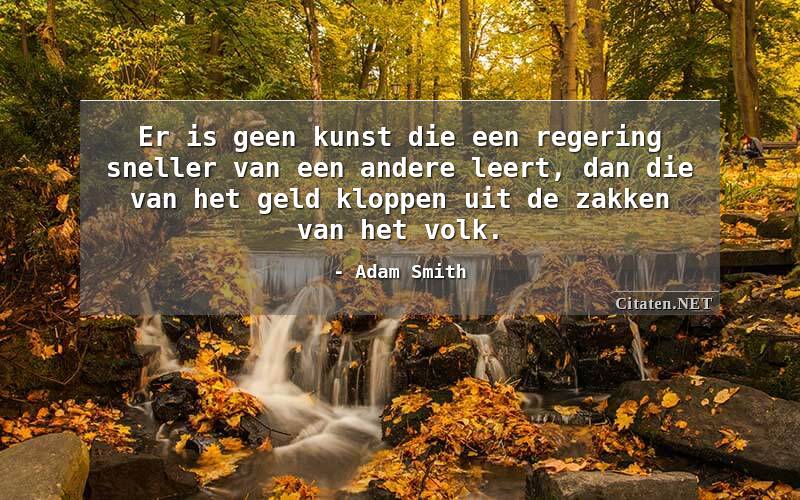
Er is geen kunst die een regering sneller van een andere leert, dan die van het geld kloppen uit de zakken van het volk.
Origineel:There is no art which one government sooner learns of another than that of draining money from the pockets of the people.
Wealth of nations (1776) Appendix― Adam Smith -
Een mens laat zich slechts door eigenbelang leiden, hij wordt door een onzichtbare hand geleid iets na te streven dat buiten zijn bedoelingen ligt.
Origineel:He intends only his own gain, and he is in this, as in many other cases, led by an invisible hand to promote an end which was no part of his intention
Wealth of Nations (1776) Bk. IV, ch.2― Adam Smith -
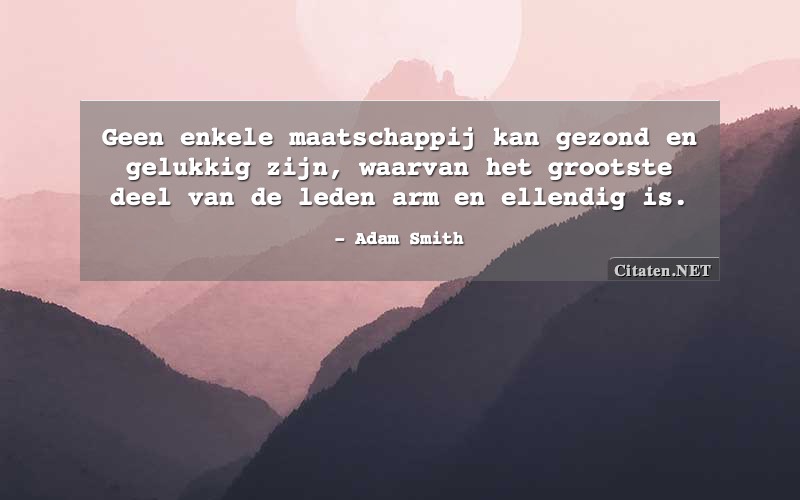
Geen enkele maatschappij kan gezond en gelukkig zijn, waarvan het grootste deel van de leden arm en ellendig is.
Origineel:No society can surely be flourishing and happy, of which the far greater part of the members are poor and miserable.
Wealth of Nations (1776) Bk.1, ch. VIII― Adam Smith -
Arbeid is daarom de werkelijke maatstaf voor de handelswaarde van alle goederen.
Origineel:Labour, therefore, is the real measure of the exchangeable value of all commodities.
Wealth of Nations (1776) Bk 1, ch 5― Adam Smith -
De wetenschap is het grote tegengif tegen het vergif van dweperij en bijgeloof.
Origineel:Science is the great antidote to the poison of enthusiasm and superstition.
Wealth of Nations (1776) Bk V, Ch.1― Adam Smith -
Consumptie is het enige doel van alle productie.
Origineel:Consumption is the sole end and purpose of all production.
Wealth of Nations (1776) Bk 4, ch 9― Adam Smith -
De jaarlijkse arbeid van elke natie is het fonds dat haar oorspronkelijk voorziet van alle levensbehoeften en gemakken die het jaarlijks verbruikt.
Origineel:The annual labour of every nation is the fund which originally supplies it with all the necessaries and conveniences of life which it annually consumes.
Wealth of Nations (1776) Introduction― Adam Smith -
Goede wegen, kanalen en bevaarbare rivieren zijn de belangrijkste middelen van vooruitgang.
Origineel:Good roads, canals, and navigable rivers, [...] are upon that the greatest of all improvements.
Wealth of Nations (1776) bk 1, ch 11, part 1― Adam Smith -
Het is door het natuurlijke effect van verbetering dat de werkelijke prijs van bijna alle fabricaten geleidelijk verlaagd wordt.
Origineel:It is the natural effect of improvement, however, to diminish gradually the real price of almost all manufactures.
Wealth of Nations (1776) bk 1, ch xi― Adam Smith -
Niemand heeft ooit een hond een gelijkwaardige en weloverwogen ruil zien maken met een andere hond van het ene bot voor het andere.
Origineel:Nobody ever saw a dog make a fair and deliberate exchange of one bone for another with another dog.
Wealth of Nations (1776) Bk 1, ch. 2― Adam Smith -
Op de lange termijn kan de arbeider voor zijn heer net zo noodzakelijk zijn als zijn heer is voor hem, maar de noodzaak hiervoor is niet zo onmiddellijk.
Origineel:In the long-run the workman may be as necessary to his master as his master is to him, but the necessity is not so immediate.
Wealth of Nations (1776) Bk 1, ch. 8― Adam Smith -
De wereld heeft nog nooit, en zal ook nooit, een volkomen eerlijke loterij aanschouwen.
Origineel:The world neither ever saw, nor ever will see, a perfectly fair lottery.
Wealth of Nations (1776) Bk.1, ch 10― Adam Smith -
Elke belasting is voor de persoon die hem betaalt een kenteken, niet van slavernij maar van vrijheid.
Origineel:Every tax, however, is to the person who pays it a badge, not of slavery but of liberty.
Wealth of Nations (1776) bk. 5, ch 2― Adam Smith
De beste Wealth of Nations van Adam Smith citaten, wijsheden, quotes en uitspraken vindt u nu al ruim 25 jaar op citaten.net.
 Walter Bagehot
 John Stuart Mill
 R. H. Tawney