Reflections on the revolution in France (1790) - Edmund Burke
Reflections on the Revolution in France is een fundamenteel kritisch werk waarin Burke de gewelddadige breuk met het verleden tijdens de Franse Revolutie veroordeelt ten gunste van geleidelijke hervorming. Het boek is wereldberoemd als de intellectuele basis van het moderne conservatisme, dankzij de nadruk op het belang van traditie, religie en maatschappelijke continuïteit. Burke’s scherpe analyse van hoe abstracte vrijheidsidealen kunnen ontaarden in tirannie maakt het tot een tijdloze politieke klassieker.














Citaten 1 t/m 16 van 16.
-
Maar wat is vrijheid zonder wijsheid, en zonder deugd? De grootste van alle mogelijke kwaden; want het is dwaasheid, verdorvenheid en gekte, zonder onderwijs of beperking.
Origineel:But what is liberty without wisdom, and without virtue? It is the greatest of all possible evils; for it is folly, vice, and madness, without tuition or restraint.
Reflections on the revolution in France (1790)― Edmund Burke -
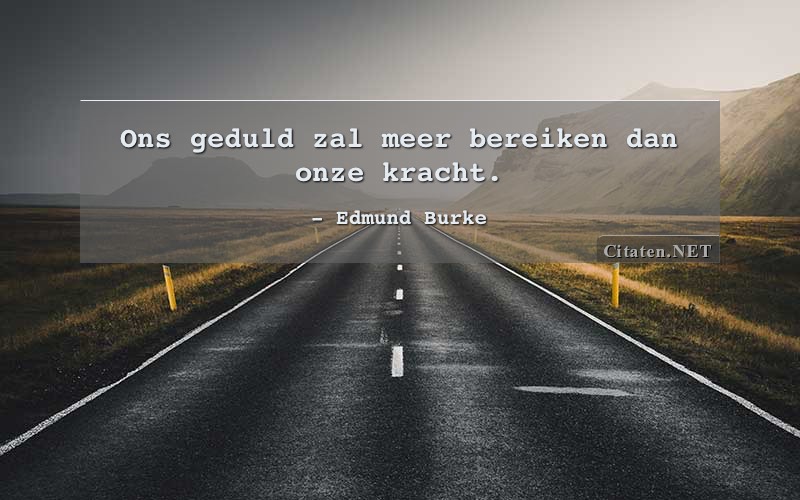
Ons geduld zal meer bereiken dan onze kracht.
Origineel:Our patience will achieve more than our force.
Reflections on the revolution in France (1790)― Edmund Burke -
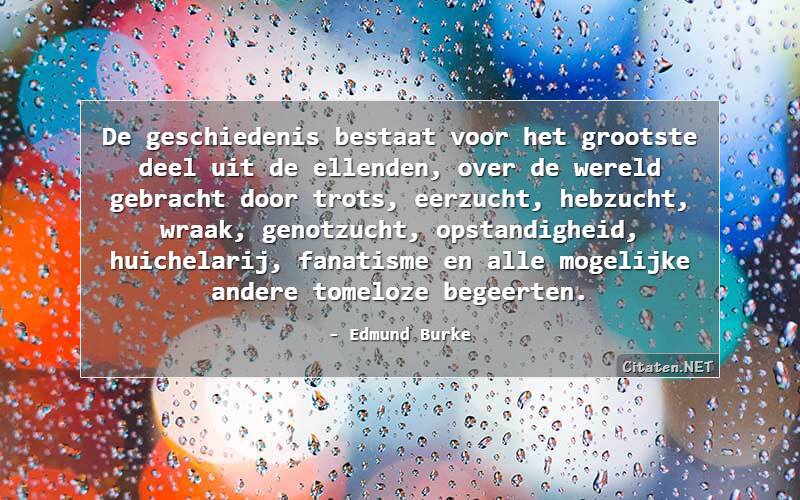
De geschiedenis bestaat voor het grootste deel uit de ellenden, over de wereld gebracht door trots, eerzucht, hebzucht, wraak, genotzucht, opstandigheid, huichelarij, fanatisme en alle mogelijke andere tomeloze begeerten.
Origineel:History consists, for the greater part, of the miseries brought upon the world by pride, ambition, avarice, revenge, lust, sedition, hypocrisy, ungoverned zeal, and all the train of disorderly appetite.
Reflections on the Revolution in France (1790)― Edmund Burke -
Bijgeloof is de religie van de zwakke geest.
Origineel:Superstition is the religion of feeble minds.
Reflections on the Revolution in France (1790)― Edmund Burke -
Een wens tot verandering is over het algemeen het gevolg van een zelfzuchtig karakter en beperkte opvattingen. Mensen die nooit terugkijken naar hun voorouders zullen ook niet voorwaarts kijken naar het nageslacht.
Origineel:A spirit of innovation is generally the result of a selfish temperament and limited views. People who never look back to their ancestors will not look forward to posterity.
Reflections on the Revolution in France― Edmund Burke -
Niets blijkt zo onderdrukkend en onrechtvaardig te zijn als een zwakke overheid.
Origineel:Nothing turns out to be so oppressive and unjust as a feeble government.
Reflections on the Revolution in France― Edmund Burke -
Een neiging om te behouden gecombineerd met een bekwaamheid om te verbeteren zouden mijn standaard van een staatsman zijn.
Origineel:A disposition to preserve, and an ability to improve, taken together, would be my standard of a statesman.
Reflections on the revolution in France (1790)― Edmund Burke -
De tijd der ridderlijkheid is voorbij. Die van sofisten, economisten en rekenaars is daarop gevolgd; en de roem van Europa is voor altijd gedoofd.
Origineel:The age of chivalry is gone. That of sophisters, economists and calculators has succeeded; and the glory of Europe is extinguished forever.
Reflections on the Revolution in France (1790)― Edmund Burke -
Een staat zonder middelen om iets te veranderen is zonder middelen voor zijn instandhouding.
Origineel:A state without the means of some change is without the means of its conservation.
Reflections on the Revolution in France (1790)― Edmund Burke -
Het is weg, dat gevoel voor principe, die kuisheid van de eer, waarbij een smet als een wonde voelde.
Origineel:It is gone, that sense of principle, that chastity of honour that felt a stain like a wound.
Reflections on the Revolution in France (1790)― Edmund Burke -
Vleierij bederft zowel de ontvanger als de gever.
Origineel:Flattery corrupts both the receiver and the giver.
Reflections on the revolution in France (1790)― Edmund Burke -
Wanneer politieke leiders ervoor kiezen om bieder te worden op een populariteitsveiling, verworden ze tot vleiers in plaats van wetgevers, worden ze instrumenten in plaats van gidsen voor het volk.
Origineel:But when the leaders choose to make themselves bidders at an auction of popularity, their talents, in the construction of the state, will be of no service. They will become flatterers instead of legislators, the instruments, not the guides of the people.
Reflections on the Revolution in France (1790)― Edmund Burke -
Goede orde is het fundament van alle goede dingen.
Origineel:Good order is the foundation of all good things.
Reflections on the Revolution in France (1790)― Edmund Burke -
Vleierij corrumpeert zowel de ontvanger als de gever.
Origineel:Flattery corrupts both the receiver and the giver.
Reflections on the Revolution in France (1790)― Edmund Burke -
Wie zijn eigen karakter verlaat om er een aan te nemen dat hem niet toebehoort, is meestal onbekend zowel met zijn eigen karakter als met het aangenomene.
Origineel:Most of those who leave their proper character and take on what doesn’t belong to them are ignorant both of the character they leave and of the character they take on.
Reflections on the Revolution in France― Edmund Burke -
Koningen zullen tirannen worden als beleid, als onderdanen opstandelingen zijn uit principe.
Origineel:Kings will be tyrants from policy when subjects are rebels from principle.
Reflections on the Revolution in France (1790)― Edmund Burke
De beste Reflections on the revolution in France van Edmund Burke citaten, wijsheden, quotes en uitspraken vindt u nu al ruim 25 jaar op citaten.net.
 Joseph Addison
 Augustine Birrell
 Algernon Sidney