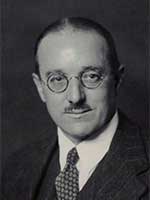
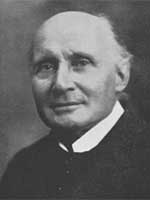
Alfred N. Whitehead
Engels filosoof en wiskundige
Leefde van: 1861 - 1947
Categorie: Filosofen | Wetenschappers Land:
Verenigd Koninkrijk
Geboren: 15 februari 1861 Gestorven: 30 december 1947
Over Alfred N. Whitehead
Alfred North Whitehead (Ramsgate (Kent), 15 februari 1861 - Cambridge (Massachusetts), 30 december 1947) was een Brits-Amerikaanse filosoof, natuurkundige en wiskundige.
Zijn bekendste wiskundige werk is de Principia Mathematica, dat hij schreef met Bertrand Russell. In de natuurkunde was zijn bekendste werk een zwaartekrachtstheorie die decennialang concurreerde met de algemene relativiteitstheorie van Albert Einstein. In de filosofie was hij de grondlegger van de procesfilosofie.
Het denken van Whitehead groeide na de Tweede Wereldoorlog onder impuls van Charles Hartshorne, John B. Cobb en David Ray Griffin uit tot een nieuwe theologische stroming, de procestheologie.
Bron Wikipedia
Boeken van Alfred N. Whitehead

Citaten 1 t/m 23 van 23.
-
We denken in grote lijnen, maar we leven in details.
Origineel:We think in generalities, but we live in detail.
The Atlantic Monthly Vol. 138, 1926, The Education of an Englishman― Alfred N. Whitehead -
De 'onnozele vraag' is de eerste aanduiding van een geheel nieuwe ontwikkeling.
Origineel:The 'silly question' is the first intimation of some totally novel development.
Dialogues of Alfred North Whitehead ch. XXII― Alfred N. Whitehead -
Aristoteles heeft alle halve waarheden ontdekt die nodig waren voor de totstandkoming der wetenschap.
Origineel:Aristotle discovered all the half-truths which were necessary to the creation of science.
Dialogues of Alfred North Whitehead (1954) Ch. XLII, sept 1945― Alfred N. Whitehead -
Ieder mens heeft een complexere structuur dan het sociale systeem waartoe hij behoort.
Origineel:Each human being is a more complex structure than any social system to which he belongs.
Dialogues of Alfred North Whitehead (1954) Appeal to Sanity― Alfred N. Whitehead -
De zuivere wiskunde, met haar moderne ontwikkelingen, kan de meest originele schepping van de menselijke geest zijn.
Origineel:The science of pure mathematics, in its modern developments, may claim to be the most original creation of the human spirit.
Science and the Modern World (1925)― Alfred N. Whitehead -
Een beschaving gaat vooruit door het aantal belangrijke handelingen uit te breiden die we weten te verrichten zonder erbij na te denken.
Origineel:Civilization advances by extending the number of important operations which we can perform without thinking of them.
― Alfred N. Whitehead -
Onderwijs bestaat uit het verwerven van de vaardigheid tot het benutten van kennis.
Origineel:Education is the acquisition of the art of the utilisation of knowledge.
The Aims of Education (1929)― Alfred N. Whitehead -
De beste omschrijving van de Europese filosofische traditie is dat ze niet meer is dan een aantal voetnoten bij Plato.
Origineel:The safest general characterization of the European philosophical tradition is that it consists of a series of footnotes to Plato.
Process and Reality (1929) Pt. II, ch. 1, sec. 1.― Alfred N. Whitehead -
De hoogste metafysische grondslag is creatieve vooruitgang naar iets nieuws.
Origineel:The ultimate metaphysical ground [is] the creative advance into novelty.
Process and Reality (1929)― Alfred N. Whitehead -
De werkelijke geschiedenis wordt niet opgeschreven omdat die niet in de hersenen van mensen maar in hun zenuwen en vitale delen zit.
Origineel:The real history does not get written, because it is not in people's brains but in their nerves and vitals.
Dialogues of Alfred North Whitehead ch. I, 06-04-1934― Alfred N. Whitehead -
Een begrip is altijd gehuld in emoties, dat wil zeggen in hoop of vrees, in haat of gretige aspiratie.
Origineel:The concept is always clothed with emotion, that is to say, with hope, or with fear, or with hatred, or with eager aspiration.
Modes of Thought (1938)― Alfred N. Whitehead -
Ieder mens is de natuurlijke beschermer van zijn eigen belangrijkheid.
Origineel:Every human being is the natural guardian of his own importance.
Science and the Modern World (1925)― Alfred N. Whitehead -
Men kan veilig aannemen dat wanneer een wiskundige of filosofische auteur met een wazige diepgang schrijft, hij onzin uitkraamt.
Origineel:It is a safe rule to apply that, when a mathematical or philosophical author writes with a misty profundity, he is talking nonsense.
An Introduction to Mathematics (1911) ch. 15.― Alfred N. Whitehead -
Vergissing is de prijs die we betalen voor vooruitgang.
Origineel:Error is the price we pay for progress.
Process and Reality (1929)― Alfred N. Whitehead -
Al het belangrijke is al eens eerder gezegd door iemand die het niet ontdekte.
Origineel:Everything of importance has been said before by somebody who did not discover it.
― Alfred N. Whitehead -
De belangrijkste vergissing in de filosofie is overdrijving.
Origineel:The chief error in philosophy is overstatement.
Process and Reality (1929) Pt. I, ch. 1, sec. 1― Alfred N. Whitehead -
De Engelsen schaffen nooit iets af. Ze stoppen het enkel in de koelkast.
Origineel:The English never abolish anything. They put it in cold storage.
Dialogues of Alfred North Whitehead (1954) Ch. 36― Alfred N. Whitehead -
De meest diepzinnige definitie van jeugd is een leven dat nog onaangetast is door tragedie.
Origineel:The deepest definition of youth is life as yet untouched by tragedy.
Adventures of Ideas (1933)― Alfred N. Whitehead -
Er is een zeer ongebruikelijke geest voor nodig die wil beginnen met te analyseren dat wat voor de hand ligt.
Origineel:It requires a very unusual mind to undertake the analysis of the obvious.
Science and the Modern World (1925) Preface― Alfred N. Whitehead -
Het is de eerste stap in de sociologische wijsheid te erkennen dat de belangrijkste vooruitgang van beschaving bestaan uit processen die de samenlevingen waarin ze plaatsvinden bijna verwoesten.
Origineel:It is the first step in sociological wisdom, to recognize that the major advances in civilization are processes which all but wreck the societies in which they occur:
Symbolism: Its Meaning and Effect (1927) ch.3― Alfred N. Whitehead -
Iemand schrijft eigenlijk slechts voor een gehoor van ongeveer tien personen. Natuurlijk, als nog meer het leuk vinden, is dat duidelijk winst. Maar als die tien tevreden zijn, is hij tevreden.
Origineel:A man really writes for an audience of about ten persons. Of course if others like it, that is clear gain. But if those ten are satisfied, he is content.
― Alfred N. Whitehead -
Rationalisme is een avontuur in het verhelderen van het denken.
Origineel:Rationalism is an adventure in the clarification of thought
Process and Reality (1929) Pt. I, ch. 1, sec. 3― Alfred N. Whitehead -
Sceptici en gelovigen zijn gewoon hetzelfde. Op dit moment zijn wetenschappers en sceptici de leidende dogmatici. Vooruitgang is in onbelangrijke details toegestaan, maar fundamenteel nieuwe ontdekkingen worden weggestopt. Dit algemeen geaccepteerde dogmatisme is de dood van de filosofische vooruitgang.
Origineel:Skeptics and believers are alike. At this moment scientists and skeptics are the leading dogmatists. Advance in detail is admitted; fundamental novelty is barred. This dogmatic common sense is the death of philosophic adventure.
― Alfred N. Whitehead
Trefwoorden in deze citaten:
Vergelijkbare auteurs
-

Francis Bacon
Engels filosoof en staatsman 110 -
Bertrand Russell
Engels filosoof, wiskundige en Nobelprijswinnaar literatuur (1950) 96 -
John Locke
Engels filosoof 27 -
George Henry Lewes
Engels filosoof en criticus 6 -
Alan Watts
Engels filosoof, priester en schrijver 6 -
Jeremy Bentham
Engels filosoof en jurist 5 -
Robin George Collingwood
Engels filosoof en historicus 4 -
Oliver S. Braston
Engels filosoof 1


Francis Bacon
Bertrand Russell
John Locke
Alan Watts
Jeremy Bentham
Robin George Collingwood